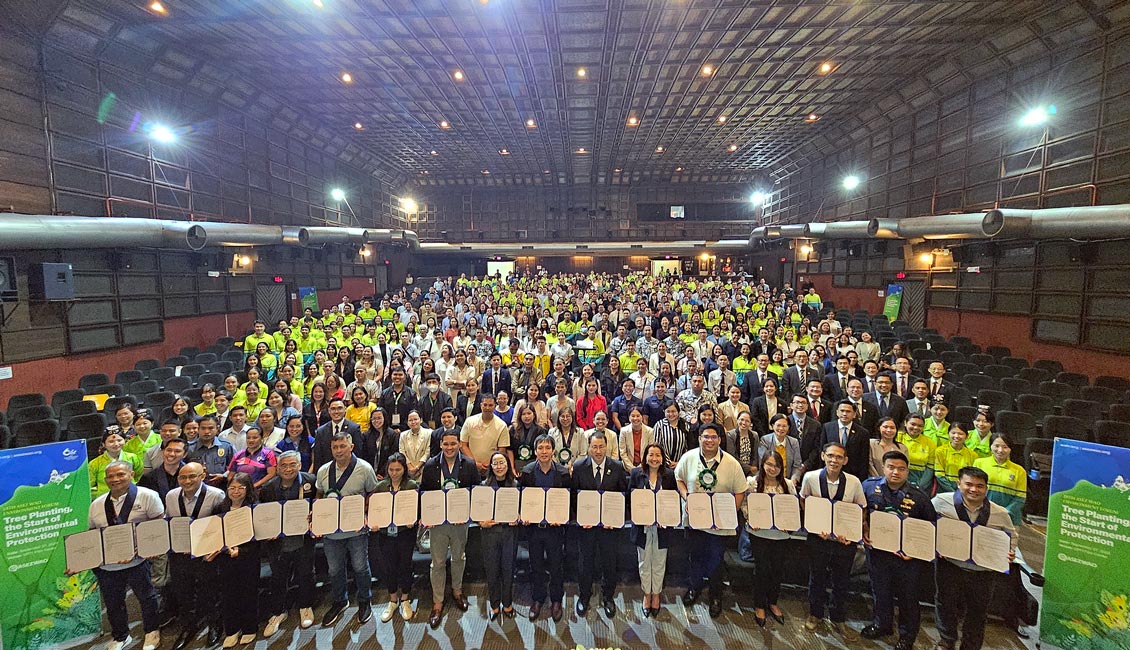
The 27th and 28th ASEZ WAO Environmental Forums Held in the Philippines
The Beginning of Environmental Protection: Tree Planting
On September 25 and 27, the 27th and 28th ASEZ WAO Environmental Forums were held in Tacloban and Quezon City, Philippines. ASEZ WAO (Young Adult Worker Volunteer Group of the World Mission Society Church of God ) hosted the events at the DENR Eastern Visayas Conference hall and the UPFI Film Center UPFI, respectively. About 560 participants attended, including ASEZ WAO members from South Korea and the Philippines, public officials, and citizens. The theme of the forum was “The Beginning of Environmental Protection: Tree Planting.” Trees absorb carbon, the main cause of global warming, purify the air, and contribute to biodiversity.


Public figures such as Eric Olivarez, Mayor of Parañaque, and Edralyn Marquez, City of Makati Councilor, sent congratulatory messages supporting the forum. During her congratulatory address at the 28th Environmental Forum, Lilian de Leon, DILG Assistant Secretary, stated, “Tree planting is a hope for a green future,” and applauded ASEZ WAO’s global environmental initiatives.
ASEZ WAO activists gave a presentation titled “Responding to Climate Change through Tree Planting,” introducing the “Mother’s Forest” project as a solution to environmental challenges. The project encourages every person on Earth to plant one tree, aiming to reduce greenhouse gases and combat climate change. It aligns with the UN’s Sustainable Development Goals (SDGs) 13 (Climate Action), 15 (Life on Land), and 17 (Partnerships for the Goals). They shared updates on the project’s progress in the Philippines and expressed their determination to achieve the ultimate goal of planting 8 billion trees worldwide. Emphasizing that “Great change begins with one person,” they called for collective participation in creating green spaces and responding to climate change through Mother’s Forest.
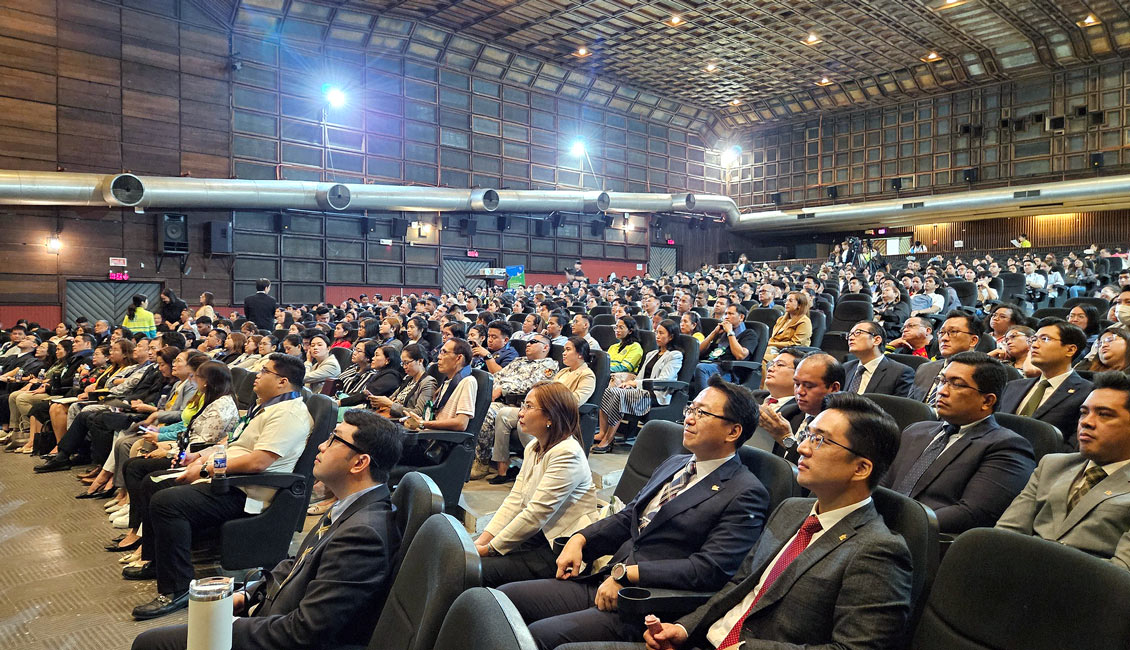
Experts such as Dr. Delia Catacutan, Center for International Forestry Research Senior Scientist, and Arturo Salazar, DENR Region 8 Director, also took the stage to emphasize the importance of tree planting. They identified reckless deforestation as a major cause of landslides, floods, and shortages of food and water, and presented visual data illustrating the severity of land degradation. They also suggested practical ways for young people to contribute to reforestation and ecosystem restoration through environmental education and campaigns.
Various performances prepared by ASEZ WAO members and local participants added richness to the event. The choir performed ASEZ WAO’s original song “Mother’s Forest” and “You Raise Me Up,” inspiring attendees and DENR Region 8 Director to take part in environmental protection. A taekwondo demonstration and a traditional Korean fan dance, presented as part of a cultural exchange program, received enthusiastic responses from local citizens interested in Korean culture.


At the 28th forum, an award ceremony was also held to recognize ASEZ WAO’s efforts. The DENR Region 8 Director of Eastern Visayas and other organizations with its leaders presented certificates of appreciation and commendations to ASEZ WAO for their active promotion of the Mother’s Forest project across the Philippines.
Centenia Magpantay, a member from Quezon City, shared, “It wasn’t easy to secure the venue and prepare the program ourselves, but hearing attendees say, ‘It’s inspiring to see you taking action to solve environmental problems, and we want to collaborate,’ made it all worthwhile.” She reaffirmed her commitment to leading proactive environmental initiatives.
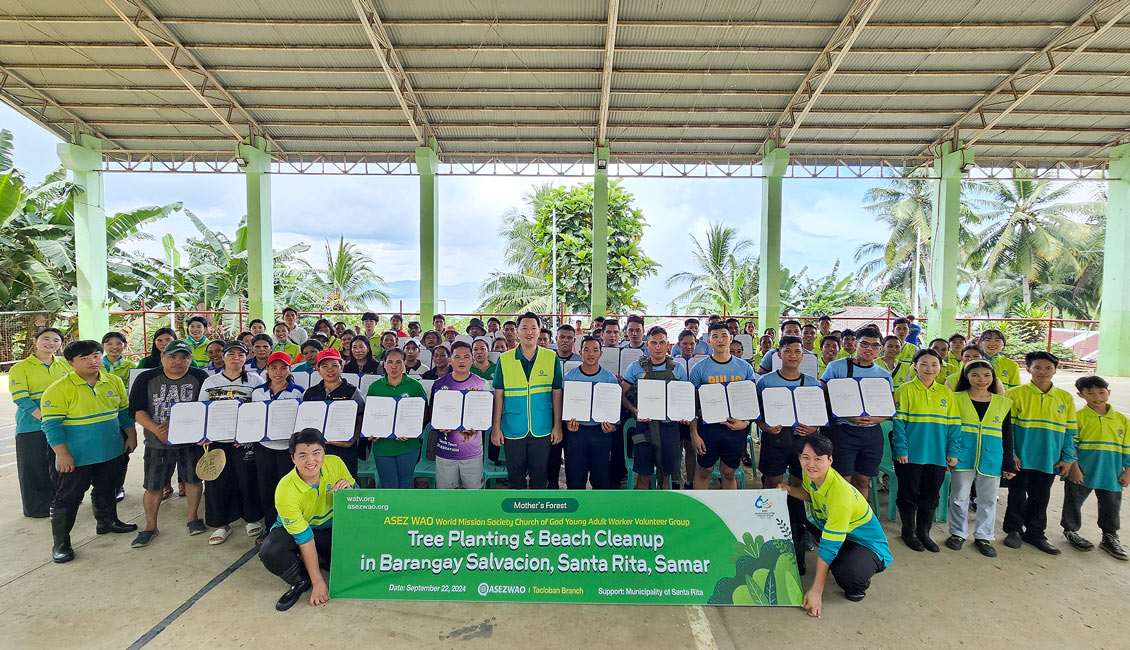
Three days before the forums, on September 22, about 200 ASEZ WAO members from Korea and the Philippines carried out the Mother’s Forest project at the beach of Barangay Salvacion in the Province of Samar. They personally transported and planted 1,200 mangrove1 seedlings provided by the Santa Rita municipality, contributing to carbon neutrality and the preservation of marine ecosystems.
1. A type of tree that grows in intertidal zones. It absorbs up to five times more carbon than forests on land.